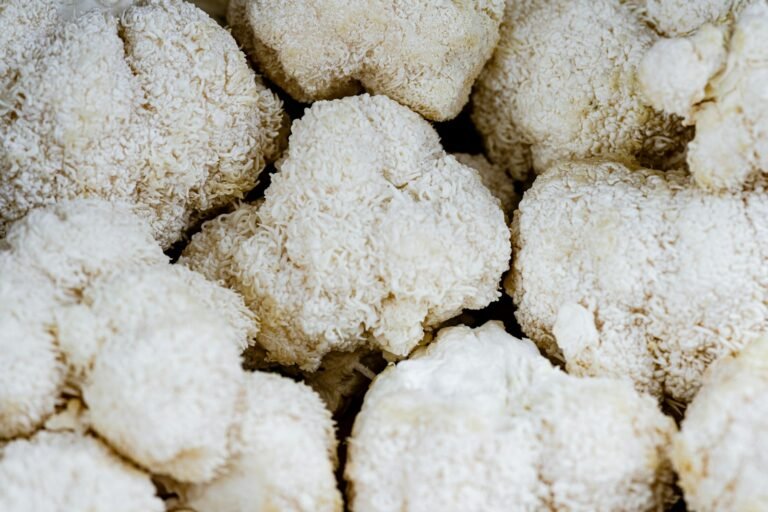

Some things don’t need an explanation to deserve attention. The Reishi mushroom is one of them — it grows quietly on rotting oaks, glows deep red in the twilight of the forest and has been considered one of the most valuable natural resources in East Asia for thousands of years. No other mushroom is as closely associated with the concept of inner peace as this one.
In an age where recreation has become a discipline and silence feels more precious than productivity, reishi is experiencing an understandable renaissance. Not as a quick fix, but as a quiet accompaniment — a mushroom that doesn’t fit into any moment when you’re in a hurry.
This article explains what reishi really is, what science says about it, how it was traditionally used and how it can be meaningfully integrated into a conscious everyday life today. Without exaggerations. Without promises that no mushroom can keep.
What is the Reishi Mushroom?
Reishi is the Japanese name for Ganoderma lucidum — a pore fungus from the lacquer mushroom family that grows on dead or dying hardwood. In Chinese, it is called Lingzhi (灵芝), which roughly translates as “mushroom of spiritual power” or “divine mushroom”. This name alone says a lot about its cultural position.
Botanically speaking, reishi belongs to the basidiomycetes — the higher fungi — and does not form lamellae, but fine pores on the underside of its fruiting body. It is not an edible mushroom in the classic sense. Its flesh is tough, woody and intensely bitter. What makes it interesting lies deeper: in a series of bioactive compounds that have been intensively studied for decades.
There are over 80 species worldwide within the genus Ganoderma. The most relevant for wellness is Ganoderma lucidum, which is found mainly in temperate climates — in East Asia, parts of Europe and eastern North America. Some species, including Ganoderma tsugae or Ganoderma oregonense, are visually almost indistinguishable and are often used synonymously.
What does reishi look like? Appearance and texture
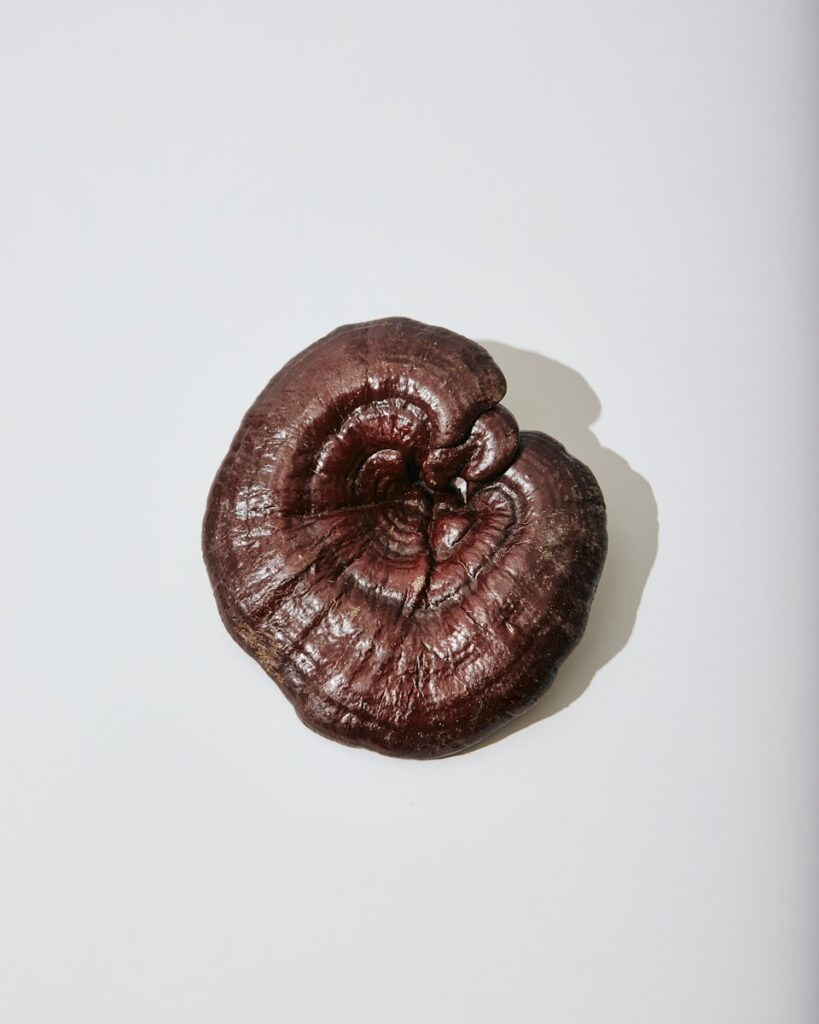
If you encounter reishi for the first time, you will hardly confuse it with an edible mushroom. Its cap is kidney-shaped to fan-like, the surface shines as if lacquered — this reflective, reddish-brown shimmer is its most unmistakable feature. Younger fruiting bodies show bright gradations from dark red in the centre to orange and whitish-yellow edges. With increasing age, this shine fades, the colors become duller and browner.
Reishi grows horizontally from the wood, without a recognizable stem — a so-called console or shelf fungus. The underside is creamy white and covered with fine pores. Fresh specimens are soft on the underside and form brown traces when touched — a useful identifying feature. The consistency is cork-like to rock-hard, depending on the age of the fruiting body.
It’s hard to use in the kitchen — not because it’s inedible, but because chewing on ripe reishi is roughly the same as chewing on cork. Its use has therefore historically always been indirect: as a decoction, tea or extract.
Origin and History: The Mushroom of Immortality
The relationship between humans and reishi goes back a long way — at least 2,000 years in the documented history of Chinese medicine, with references in much older oral traditions. In Shennong Bencao Jing, one of the oldest works of traditional Chinese medicine (circa 2nd century BC), reishi has been classified as a remedy of the highest category: safe for continuous use, strengthening the body and mind, without side effects.
At that time, reishi was rare. In the wild, it does not grow in large quantities — a single fruiting body was considered a sign of good luck. Imperial gardens were created just to cultivate reishi. In Chinese iconography, it appears as a symbol of happiness, longevity, and spiritual enlightenment. Taoist monks wore his dried fruiting body as an amulet.
In Japan, reishi gained similar cultural significance under the name Mannentake — “mushroom of ten thousand years.” It can be found in the art history of East Asia on woodcuts, lacquer boxes and robes of the aristocracy. The fact that a fungus has penetrated so deeply into the imagery of an entire civilization says more about its symbolic power than any drug study.
It was not until the 20th century that reishi was cultivated commercially — first in Japan, later in China, Korea and Taiwan. This development turned it from an imperial rarity into a natural product accessible worldwide.
Ingredients: What’s in Reishi Mushroom?
Science has identified over 400 different bioactive compounds in reishi. Three groups are particularly in the focus of research.
Beta-glucans
These polysaccharide compounds are the best-studied class of active ingredients among medicinal mushrooms. Beta-glucans are soluble in water and are considered immunomodulating — they appear to affect the activity of certain immune cells without overstimulating the immune system. Heat and water are needed for effective extraction: classic hot water extraction.
Triterpenes (especially ganoderic acids)
Reishi contains over 150 different triterpenes, including the characteristic ganoderic acids, which are responsible for the pronounced bitter taste. Triterpenes are not water-soluble — they dissolve in alcohol. Studies suggest anti-inflammatory, antihypertensive and anti-allergic properties. For a complete extraction of both groups of active ingredients, a double extraction — i.e. a combination of hot water and alcohol — is necessary.
Other connections
Reishi also contains sterols (precursor molecules for hormone synthesis), adenosine (relevant for blood circulation), minerals such as germanium and amino acids. Its nutritional profile in the classic sense is modest — reishi is valued not for its protein or vitamin content, but for the sum of its bioactive compounds.
Reishi mushroom effect: What is proven, what is plausible?
Nuance is required here. Reishi is not a drug. Previous research provides interesting clues, but no clinically proven promises of healing. What science knows, what it suspects and what is still open — that can be sensibly separated.
Immunomodulation
The best occupied area. Studies show that reishi beta-glucans can affect the activity of NK (natural killer cells) cells and macrophages. The immune system is not stimulated, but seems to be better regulated — with regular intake. The term “adaptogen” describes this mechanism well: a substance that helps the body adapt to stressors.
Stress resistance and sleep
Traditionally, reishi was mainly used for restlessness, sleep problems and nervous exhaustion. Recent animal studies and some small human studies suggest that certain reishi compounds may affect the serotonergic system and modulate the sleep-wake cycle. Whether and to what extent this can be transferred to humans requires further research.
Antioxidant properties
Reishi contains compounds with antioxidant effects — that is, they can neutralize free radicals. This is not unusual (many foods have antioxidant properties), but it explains part of the traditional reputation as a “rejuvenating” mushroom.
Blood pressure and cholesterol
Some studies, so far mainly on animals, show antihypertensive effects. A human study from 2004 suggested that reishi extract could lower LDL cholesterol levels — but the data is still too thin for clear recommendations.
Oncological research
Reishi is sometimes used as a supplement in integrative oncology in Asia. Some studies suggest immunostimulatory effects in cancer patients receiving conventional therapies. Important: Reishi is not a cancer drug and does not replace medical treatment. Anyone considering this option should always seek a conversation with the attending physician.
Traditional Uses: How Was Reishi Used Earlier?
In Traditional Chinese Medicine (TCM), reishi has been assigned to the five classic categories of Shen remedies — substances that are said to calm the mind, alleviate anxiety and strengthen the inner center. It was considered a toning for the heart, lungs and liver. It was used as a long, intense brew: fresh or dried pieces were boiled in water for hours, and the tea was drunk daily.
It was used in a similar way in traditional Japanese herbalism (kampo). Monks valued it as a meditation companion — not because it was hallucinogenic (it is not), but because it was supposed to promote concentration and inner silence during long periods of sitting.
In Korea, Vietnam and other parts of Southeast Asia, parallel traditions exist. The use against insomnia, exhaustion, liver problems and as a general tonic runs like a red thread through the different cultures — a remarkable consensus across national borders.
Scientific Research on Reishi: The Current State
Reishi research has evolved significantly over the past three decades. Today, there are thousands of studies — but with one important caveat: a large proportion of them are in vitro studies (in test tubes) or animal experiments. Clinical human studies with robust methods and large numbers of subjects are still rare.
What existing research shows: Reishi extracts exert clear immunomodulating, anti-inflammatory and antioxidant activity in laboratory settings. These effects are reproducible and biologically plausible. However, the transfer to the human organism is complex — absorption, bioavailability, and individual responses vary considerably.
A 2016 systematic review in the Cochrane Database of Systematic Reviews analyzed reishi in cancer patients and found that it can improve immune function and improve quality of life — as a complementary measure, not a therapy. This is a typical picture for reishi research: promising, but not yet a conclusive verdict.
Current research in the field of adaptogenicity, sleep regulation and the gut microbiome is promising. Reishi appears to have prebiotic effects — it affects the composition of the intestinal flora in a way that may be linked to positive effects on immunity and mood. This mechanism is not yet fully understood, but it is scientifically discussed.
Reishi in modern everyday life: How do you use it sensibly?
Reishi is not a food that you just throw in the pan. The preparation requires awareness — and that is perhaps just the right thing for a mushroom that is so closely associated with slowness.
As a tea or brew
The traditional method. Dried reishi slices are boiled with water and then simmered gently for 30 to 90 minutes. The result is a dark, intensely bitter brew — not a pleasure for everyone. If you appreciate the taste, you can soften it with a touch of ginger or cinnamon. As a daily morning ritual, this tea has something almost meditative: the slowness of the process is not a disadvantage, but part of the ritual.
As a powder
Dried reishi powder can be incorporated into smoothies, soups or cereal porridge. The taste is also present here, but easier to integrate with other ingredients. Important: Powder from the dried raw mushroom is not the same as an extract — the bioavailability of bioactive compounds is significantly lower.
As an extract
This is the method that makes the most sense from today’s perspective — if you want to benefit specifically from the bioactive compounds. A high-quality extract concentrates the water-soluble beta-glucans and the alcohol-soluble triterpenes in a form that the body can absorb well. A few drops in a cup — that’s all.
Reishi in tea, coffee and evening rituals
One of the reasons why reishi fits so well into modern wellness cultures is its uncompromising taste. He needs accompaniment — and this necessity makes him a natural part of rituals.
Morning ritual: Reishi in coffee or cocoa
The tart, earthy undertone of reishi extract harmonizes surprisingly well with dark coffee or a strong ceremonial cacao. A few drops of liquid extract in the morning coffee — hardly noticeable in taste, but deliberately placed. This combination has long since found its way into the specialty coffee and cocoa community because it adds an extra dimension to the start of the day.
Evening ritual: Reishi in warm milk drink or herbal tea
Perhaps the most sensible form of application for many people: Reishi in the evening. Traditionally, it was used for just that — to find silence after a long day. A warm oat or almond drink, a cardamom tea, a tulsi infusion — supplemented with a few drops of reishi extract — can become part of a conscious evening ritual that signals to the body: now is the time for rest.
Reishi and meditation
In the Zen tradition, mushrooms and herbs were often taken before or during meditation. Whether reishi has a measurable effect on the depth of meditative states has not been scientifically proven. But that may be the wrong question. The ingestion itself — the pause, the preparation, the conscious drinking — can be an anchor.
Reishi as a liquid extract: Why format is important
The discussion about reishi often ends at a practical point: How do I take it daily, without much effort, without improvising? The answer that many are looking for is an extract — and here the form is crucial.
There is a world of difference between a simple reishi powder and a liquid extract. Raw powder does contain the compounds of the fungus, but many of them are hardly bioavailable in unchanged form. The cell walls of the fungi are made of chitin — a material that the human body breaks down poorly. Without broken cell walls, without extraction by water and alcohol, a large proportion of the bioactive compounds do not even reach where they could work.
A high-quality liquid extract combines both extraction methods: hot water extraction for the beta-glucans, alcohol extraction for the triterpenes. The result is a concentrated, liquid format that can be integrated into any liquid with just a few drops — no capsules, no dosage puzzles, no compromise on quality.
The liquid format has another advantage: it can be used ritually. Count drops into the glass. Watch the tea darken. These are small, conscious moments — and they add up to a habit that lasts.
Quality begins before extraction — with the origin of the fungus, the purity of the substrate, the care taken in the process. More about this on the Taovitalis quality page.
Storing and preparing reishi
Fresh Reishi
Freshly collected or purchased Reishi fruiting bodies will keep for a few days at refrigerator temperatures. Since they are hardly eaten directly, the freshness is less critical than with edible mushrooms — it is more important that no mold sets in. If in doubt, process or dry immediately.
Dried Reishi
Dried slices or powders, packed airtight, can easily be kept for one to two years in a dark, cool place. A desiccant in a storage jar further extends the shelf life. Light and moisture are the biggest enemies — both accelerate the breakdown of bioactive compounds.
Making Reishi Tea
Add dried reishi pieces to water (approx. 3–5 g per litre), bring to a boil and then simmer on a low heat for 45 to 90 minutes. Cool, strain, drink — or put in the refrigerator and consume within two to three days.
Liquid Extract
After opening, store away from light and in a cool place. Most high-quality extracts can be kept for several months to a year thanks to their alcohol content. The recommended daily dose is stated on the packaging — usually 1 to 2 ml daily.
Side effects and notes: What to consider
Reishi is considered well tolerated at normal dosages. Nevertheless, there are some points that you should know — not to discourage, but to make informed decisions.
Digestive problems. Some people experience mild stomach problems, especially at the beginning or at higher doses. It makes sense to start slowly and start with low doses.
Antihypertensive effect. If you are already being treated with medication for high blood pressure or have low blood pressure, you should only take reishi after consulting your doctor. Additive effects are possible.
Anticoagulant effect. Reishi can slow blood clotting. Caution is advised in combination with blood-thinning medications (aspirin, ibuprofen, Marcumar). Before planned operations: at least two weeks break.
Liver health. There are very rare reports of elevated liver enzyme levels with long-term high doses. In case of known liver disease, a doctor should be consulted.
Pregnancy and breastfeeding. Too little data — therefore caution and abstinence are recommended.
Allergy. Mushroom allergy sufferers should avoid reishi or seek medical advice.
For healthy adults without relevant pre-existing conditions, reishi is well tolerated at normal dosages according to current knowledge. If you are unsure, ask first, then start.
Frequently Asked Questions about Reishi
Is Reishi Healthy?
Reishi contains a number of bioactive compounds — including beta-glucans and triterpenes — that have been shown in studies to have immunomodulating, anti-inflammatory, and antioxidant properties. Whether and to what extent these effects are clinically relevant in humans has not yet been conclusively clarified. Reishi is not a drug, but it can be considered a useful addition to a conscious lifestyle.
What does reishi taste like?
Intensely bitter, earthy and slightly woody. Reishi is not meant to be eaten on its own — that would hardly be possible anyway due to its hard texture. As a tea or extract, the bitterness remains present, but blends well with dark drinks such as coffee or strong herbal tea.
How to take reishi?
The most common forms are: tea made from dried reishi pieces (long simmering necessary), capsules with dried powder, powder to stir into drinks, and liquid extracts. The latter are considered particularly efficient because they contain both water- and alcohol-soluble active ingredients in a concentrated manner and are easy to dose.
Can you take reishi daily?
Yes, reishi is traditionally used as a permanent preparation and not as a short-term application. Many of its postulated effects — especially immunomodulating ones — are said to unfold only with regular intake over weeks to months. In healthy adults with no pre-existing conditions, daily use at normal doses is considered safe.
What are the side effects of reishi?
The most common side effect of reishi is mild nausea or stomach upset, especially at the beginning. Rarely, elevated liver enzyme levels have been reported at very high doses. Reishi also slows blood clotting and can lower blood pressure — both relevant in the case of corresponding pre-existing conditions or medication. Pregnant and breastfeeding women should avoid reishi.
Is there scientific evidence for the effect of reishi?
Yes, but with restrictions. There are hundreds of laboratory studies and animal studies documenting immunomodulating, anti-inflammatory, and antioxidant properties of reishi compounds. Clinical human studies with reliable results have so far been less numerous. The research is promising, but not yet complete.
Can you mix reishi in coffee?
Yes — and it’s one of the most popular ways to prepare it. The bitter, earthy character of reishi extract harmonizes well with espresso or black coffee. A few drops of liquid extract in your morning coffee are hard to taste, but can be deliberately set as a daily ritual.
What is the difference between reishi powder and reishi extract?
Reishi powder is ground, dried fruiting body. The bioactive compounds are contained, but poorly bioavailable due to the chitin walls of the fungal cells. An extract — ideally a double extract of hot water and alcohol — dissolves the beta-glucans and triterpenes and concentrates them in a form that the body can absorb much better. The active ingredient density is considerably higher in the extract.
When is the best time to take Reishi?
There is no scientifically proven “best” time. Traditionally, reishi is taken in the evening, as it is associated with relaxation and sleep. Those who take it in the morning appreciate it as a quiet start to the day. The most important thing is regularity — not the exact timing.
How was reishi traditionally used?
In Traditional Chinese Medicine, reishi was mainly used as a strengthening agent for the mind and body – against exhaustion, insomnia and as a long-term tonic. The classic form of preparation was a brew of dried Reishi slices lasting several hours. Tinctures and powders were also used. In Japan and Korea, there are similar traditions that describe reishi as a means of inner balance and longevity.
Conclusion: What Reishi Is — and What It Isn’t
Reishi is not a miracle cure. It is an exceptionally well-researched mushroom with a 2,000-year history of use and a growing scientific database — which, to be honest, still leaves many questions unanswered.
What it is: a complex natural product that can benefit the body in certain areas — if it is properly prepared, taken regularly and embedded in a meaningful context. No substitute for sleep, exercise or good nutrition. But a possible, patient addition.
The beauty of reishi is also the slow. It does not have an immediate effect. It demands consistency. Perhaps this is his real message — in a culture that expects immediate effect as the standard.
Note: This article is for general information only and does not replace medical advice. If you have any health questions or existing illnesses, please contact a doctor you trust.