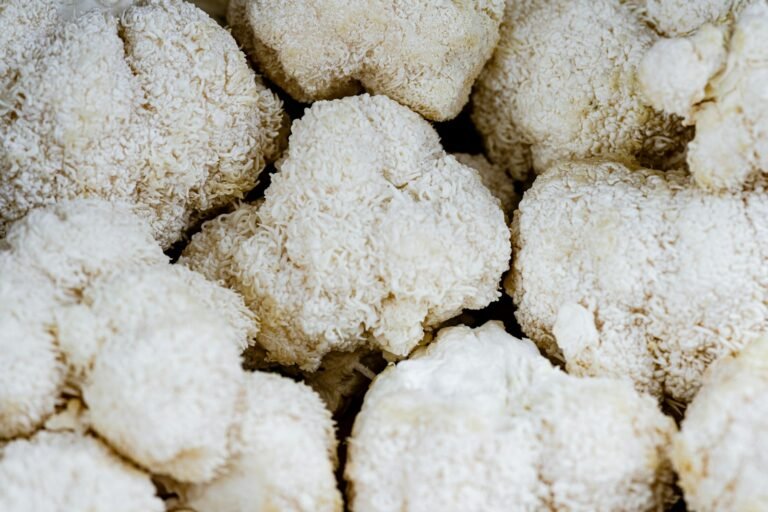

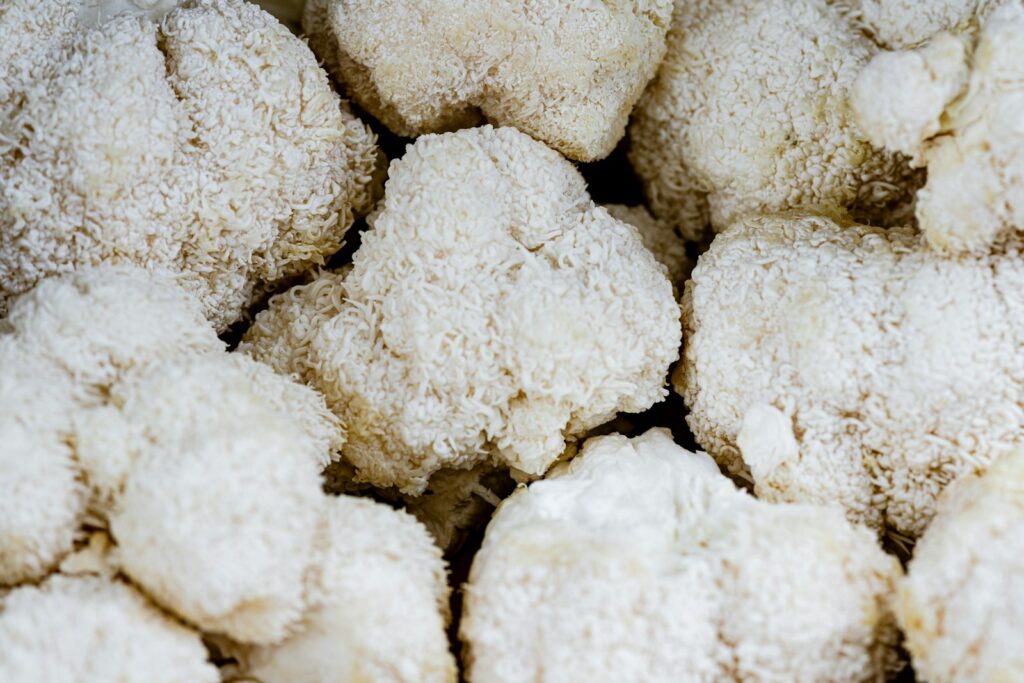
Some mushrooms are noticed before you even know anything about them. The Lion’s Mane is one of them. It grows in soft, white cascades of old beech wood, looks like a medusa jellyfish or the mane of a silent lion — and has had a reputation in East Asia for centuries that goes far beyond the kitchen.
At a time when focus has become the scarcest resource and mental clarity is perceived almost as a luxury, this mushroom is becoming the focus of serious scientific discussion. Not as a miracle cure. Not as a trend. But as a natural product with a remarkably coherent tradition and a growing, albeit still incomplete, research base.
This guide explains what Lion’s Mane is, what it contains, what science knows about it — and how it can be meaningfully integrated into a conscious everyday life today. Without exaggerations. Without promises that no mushroom can keep.
What is the Lion’s Mane mushroom?
Lion’s Mane is the English trivial name for Hericium erinaceus — also known as Lion’s Mane in German, sometimes as Monkey’s Head Mushroom or, in Japanese, as Yamabushitake (山伏茸), the “mushroom of the mountain monks”. Botanically, it belongs to the Hericiaceae family, a group of fungi characterized by their characteristic drooping spines.
Hericium erinaceus grows as a saprobiont — it decomposes dead or dying hardwood and is found worldwide in temperate climates: North America, Europe and East Asia. In the wild, it is a rather rare find, which is why it is protected in many countries. In culture, on the other hand, it is easy to breed and is now also available in Europe in organic quality.
The genus Hericium includes several species — including Hericium coralloides (coral mane) and Hericium americanum — that are visually similar but botanically and substantially different. When wellness and research literature talks about Lion’s Mane, Hericium erinaceus is almost exclusively meant.
What does Lion’s Mane look like? Appearance and texture
It’s easy to describe Lion’s Mane — he looks like nothing else. No hat, no slats, no tubes. Instead: a spherical to slightly irregular fruiting body, from which dense, soft spines hang downwards. Fresh it is pure white to cream-coloured; with age — or after harvest — it begins to turn yellowish, signaling a loss of quality. A fresh, flawless Lion’s Mane has the appearance of fine snow or silk.
The spines themselves become 1 to 5 centimeters long in adult fruiting bodies. The entire fruiting body can reach diameters of up to 40 centimetres, but weighs an average of 100 to 500 grams. In the forest, it grows directly from the wood, without a visible stem — a compact, silent body.
The texture is remarkable: raw, Lion’s Mane has a slightly rubbery, firm consistency that becomes a tender, meaty bite when cooked. The comparison with scallops or crabs is common in kitchen circles — and not exaggerated. This texture makes it one of the few medicinal mushrooms that is suitable as a full-fledged kitchen player, not just as an extract.
Origin and History: The Mushroom of the Mountain Monks
In the Chinese medical tradition, Hericium erinaceus already appears in Shennong Bencao Jing — one of the oldest standard works of Chinese herbal medicine. There it is described as stomach-friendly, strengthening for the five internal organs and promoting mental peace. Tradition dates back to at least the Han Dynasty (206 BC – 220 AD).
In Japan, the mushroom was known as Yamabushitake — named after the Yamabushi, ascetic Buddhist mountain monks who valued it as a source of food and probably also as a meditation companion. The close connection between Lion’s Mane and mental focus runs like a thread through various Eastern cultures — a consensus that had no advertising intention.
For a long time, the lion’s mane was almost unknown in Europe. It was only in the course of the growing Western preoccupation with traditional Asian medicine and then with the emergence of medicinal mushroom research in the 1990s and 2000s that it gained attention in this country. The first targeted studies of its neuroactive compounds took place in Japanese laboratories — and the results generated considerable scientific interest.
Today, Lion’s Mane is cultivated commercially on several continents. The main producing countries are China, Japan, Korea and — with increasing importance — Austria and Germany, where certified organic cultivation is carried out in controlled environments.
Ingredients: What’s in Lion’s Mane?
What distinguishes Lion’s Mane from other medicinal mushrooms is not its breadth, but its specificity. It contains groups of active ingredients that are unique in this combination — and that provide biological plausibility for the traditional fields of application.
Hericenone and Erinacine
These are the compounds that have made Lion’s Mane famous in neuroscience. Hericenone are found in the fruiting body and can cross the blood-brain barrier. Erinacins are mainly found in mycelium — the network of underground fungal threads — and their neuroactive effect has been particularly well studied. Both classes of compounds have shown in laboratory studies the ability to stimulate the synthesis of nerve growth factor (NGF) — a protein that is crucial for the survival, growth, and maintenance of nerve cells.
The erinacin-A content is a relevant quality indicator for high-quality extracts — and one that the TAOVITALIS Bio-Lion’s Mane liquid extract has confirmed through laboratory analysis.
Beta-glucans
As with other medicinal mushrooms, Lion’s Mane contains polysaccharides — especially beta-glucans — which are associated with immunomodulating properties. They are water-soluble and easily obtainable by hot water extraction. The beta-glucans of Lion’s Mane have been studied, but are not the focus of interest — this is done here by the fungus-specific hericenone and erinacins.
Other connections
Lion’s Mane also contains sterols, fatty acids, polyphenols and a number of minerals. As an edible mushroom, it is also a respectable source of protein: Fresh it contains between 2 and 4 grams of protein per 100 grams, dried correspondingly more. This distinguishes it from reishi or chaga, which are hardly suitable as a food source, but are valued as extract suppliers.
Lion’s Mane effect: What is proven, what is plausible?
A clear picture, honestly drawn: Lion’s Mane is one of the most neuroscientifically interesting mushrooms currently being researched. The results are promising, but human research is still in its early stages. What is known, what is plausible and what remains open can be sensibly separated.
Nerve growth and cognitive function
The most intensively studied area. Hericenone and erinacine have been shown to promote NGF synthesis in cell culture experiments and animal experiments. NGF is a growth factor that supports the development and maintenance of neurons — especially relevant for areas of the brain associated with learning, memory, and emotional processing.
In a human pilot study from Japan (Mori et al., 2009), people over 50 with mild cognitive impairment showed improved cognitive test results after 16 weeks of daily Lion’s Mane intake — the effects were reversible after discontinuation. The study was small and unblinded, but is considered an important starting point.
Nervous system and regeneration
Erinacines have shown neuroprotective effects in animal studies — they appear to protect nerve cells from damage and promote the regeneration of damaged peripheral nerves. Research into neurodegenerative diseases such as Alzheimer’s and Parkinson’s is still in its early stages, but biologically plausible.
Mood and anxiety
Some recent studies suggest anxiolytic — anxiety-reducing — effects. A 2019 human study (Vigna et al.) showed a reduction in irritability and anxiety in menopausal women after four weeks of taking Lion’s Mane cookies. The number of subjects was small, the methodology limited — nevertheless an interesting indication of the connection between NGF and emotional regulation.
Immunomodulation and gut
Lion’s Mane beta-glucans show immunomodulating activity in laboratory studies. In addition, there are initial indications of prebiotic effects: The fungus could have a positive influence on the composition of the intestinal microbiota — a field of research that is attracting particular interest due to the well-documented gut-brain axis.
Antioxidant properties
Lion’s Mane contains compounds with antioxidant effects. This is not a unique selling point, but it complements the overall profile of a mushroom traditionally associated with longevity and vitality.
Traditional use: How was Lion’s Mane used?
In Traditional Chinese Medicine, Hericium erinaceus was assigned to the stomach, the spleen and the nervous system. It was considered to be tonic —that is, uplifting and strengthening in cases of exhaustion and weakness—and was used for digestive ailments, chronic fatigue, and as a general remedy for strengthening the mind.
Unlike Reishi, which was primarily used as a tincture or decoction, Lion’s Mane was also a food in China. In classical Chinese cuisine, it was simmered with poultry stock, made into soups or used in medicinal rice groats. The boundary between food and remedy was fluid here.
In Japan, Buddhist monks valued the Yamabushitake not only as a kitchen product, but also as a spiritual companion. In the Zen tradition of meditative concentration — zazen — foods and herbs that promoted inner silence were deliberately chosen. Lion’s Mane was one of these companions.
Similar culinary and medicinal traditions exist in Korea and other parts of East Asia. The constant link between this mushroom and cognitive clarity — which emerged independently and in parallel across different cultures — is a clue that goes beyond folklore.
Scientific Research on Lion’s Mane: The Current State
The research on Lion’s Mane is young compared to other medicinal mushrooms, but remarkably concentrated. While there are decades of immunological research on reishi, the systematic study of Lion’s Mane did not begin until the late 1980s — with the isolation of the first Hericenone by Japanese researchers.
Today, the primary literature includes hundreds of studies, the majority of which were conducted in vitro or on rodent models. The biological plausibility of the neuroactive effect is well supported. Human studies are less numerous, but increasingly qualitatively meaningful.
Particular note: With Lion’s Mane, the quality and specificity of the extract used is decisive for the validity of studies. Products that contain only mycelium and no material rich in erinacin-A sometimes show significantly weaker effects. This makes it difficult to compare studies — and underscores why origin and extraction quality play a central role in product selection.
The most promising current research directions are: neuroprotective protection in neurodegenerative diseases, peripheral nerve regeneration after injury and the interaction between Lion’s Mane and the gut-brain axis. All three areas are still in a state of “we know enough to continue researching” — not in a state of “we know enough to make clear recommendations.”
Lion’s Mane in modern everyday life: How do you use it sensibly?
Lion’s Mane is one of the few medicinal mushrooms that can be used sensibly in two completely different contexts: in the kitchen and as a dietary supplement. This is a special feature that makes it easier for him to get started in everyday life.
As a fresh edible mushroom
Fresh Lion’s Mane can be roasted, braised or roasted in the oven. Most of the effect is achieved by high heat and a little fat: fry the slices in butter or olive oil until golden brown, season with sea salt — the result is amazingly fleshy in texture. As a side dish, on toasted sourdough or in risotto, it is a serious kitchen ingredient. However, the Hericenone are sensitive to heat — when consumed as food, it makes a contribution, but not a concentrated dose of the active ingredient.
As a powder
Dried powder from the fruiting body can be stirred into smoothies, porridge or soups. The distinction is important here: powder from the fruiting body and powder from the mycelium are not equivalent. Many inexpensive products consist of mycelium on a grain substrate — the end product then contains mainly starch, hardly any hericenone. Fruiting body powder is the right starting point, but again, the bioavailability of erinacins is limited without extraction.
As an extract
The most efficient way when it comes to the bioavailability of bioactive compounds. A high-quality dual extract combines hot water extraction (for beta-glucans) with alcohol extraction (for hericenone and fat-soluble compounds) — and concentrates the result in a form that the body can absorb well.
Lion’s Mane in Coffee, Cacao and Morning Rituals
One of the reasons why Lion’s Mane fits so well into contemporary wellness cultures: It has a mild, slightly nutty taste of its own that blends inconspicuously into dark hot drinks. It does not force an adaptation of taste, it accompanies.
Lion’s Mane in the morning coffee
The combination is common because it works. A few drops of liquid extract in espresso or black coffee — barely noticeable in taste, but deliberately placed. If you understand the morning as a time for focus, you can make Lion’s Mane a silent addition to an already existing ritual. No new drink, no discipline — just another step in the existing process.
Lion’s Mane at Ceremonial Cacao
Cacao and medicinal mushrooms share a common cultural history as ceremonially used plant products. A warm cacao — with a little spice, a hint of vanilla — harmonizes well with the earthy undertone of Lion’s Mane. This combination is suitable as a quieter start to the morning or as a conscious lunch break.
Lion’s Mane in herbal tea or warm oat drink
If you don’t drink coffee, herbal tea or warm plant-based drinks are just as elegant. A tea made from tulsi, ginger or ashwagandha — supplemented with Lion’s Mane extract — creates a morning or midday ritual that can be designed both sensorially and intentionally.
The decisive thing is that it is not about the number of active substances per cup. It’s all about regularity. Lion’s Mane is not an acute supplement. He unfolds his character — when he unfolds something — over weeks, not over hours.
The TAOVITALIS Bio-Lion’s Mane Liquid Extract is a dual extract from our own, certified organic cultivation in Austria — laboratory-tested, 100% from the fruiting body. A few drops in the morning drink of choice: this is the format that remains.
If you are curious about how different medicinal mushrooms complement each other in everyday life, you will find further context in our journal — including the complete guide to reishi, the evening companion among medicinal mushrooms.
Storage and preparation of Lion’s Mane
Fresh Lion’s Mane
Fresh Lion’s Mane will keep in the refrigerator for 3 to 7 days, preferably in a paper bag or on a plate covered with a kitchen towel — not a plastic bag that stores moisture. As soon as it turns yellowish or shows spots that are soft to the touch, the quality has dropped. For extract purposes, this plays less of a role; freshness counts for the kitchen.
Dried Lion’s Mane and powder
Sealed airtight, protected from light and stored in a cool place, dried Lion’s Mane will keep for 1 to 2 years. A desiccant in the storage container protects against moisture absorption. Powder should always be taken with a dry spoon to avoid clumping.
Lion’s Mane as a tea or brew
Bring dried pieces (3-5 g per litre of water) to the boil and leave to infuse for 30 to 60 minutes on a low flame. Strain and drink lukewarm or hot. The taste is mildly earthy, more pleasant than reishi — no intense bitter profile. Can be kept in the refrigerator for 2 to 3 days.
Liquid Extract
After opening, store away from light and in a cool place. Thanks to the alcohol content, high-quality liquid extracts have a shelf life of 12 to 24 months. The daily dose — usually 1 to 2 ml — can be dosed precisely via the dropper. No weighing, no measuring, no risk of overdose.
Side effects and notes: What to consider
Lion’s Mane is considered to be very well tolerated at normal dosages. If you use it as a supplement as part of a conscious lifestyle, you will not experience any symptoms in most cases. Nevertheless, there are some points that make informed decisions easier.
Digestive problems. Rare, but possible — especially when getting started or at unusually high doses. A slow start with low amounts is the easiest way to avoid this.
Allergic reactions. People with a known fungal allergy should seek medical advice before taking it. Reactions are rare, but biologically possible.
Anticoagulant interaction. Like some other medicinal mushrooms, Lion’s Mane can have a slight effect on blood clotting. Anyone taking blood-thinning medication should address this. Before planned operations: plan a break of at least two weeks.
Immunosuppressants. Since Lion’s Mane can modulate the immune system, theoretical caution is advised when taking immunosuppressants (e.g. after organ transplantation). Medical consultation is useful.
Pregnancy and breastfeeding. In the absence of sufficient studies, restraint is recommended. Not because a specific risk is known, but because the database for a well-founded recommendation is missing.
For healthy adults without relevant pre-existing conditions and without long-term medication, Lion’s Mane is considered safe according to current knowledge. If you are unsure, as always, ask first, then begin.
This article does not replace medical advice. If you have any health questions, contact a doctor you trust.
Frequently Asked Questions about Lion’s Mane
Is Lion’s Mane healthy?
Lion’s Mane contains unique bioactive compounds — most notably hericenone and erinacine — that have been studied to stimulate nerve growth factor (NGF) synthesis. This makes it one of the most neuroscientifically interesting medicinal mushrooms currently being studied. Whether and to what extent these effects are clinically relevant in humans is not yet fully understood. It can certainly be considered a useful addition to a conscious lifestyle — but it is not a drug.
What does Lion’s Mane taste like?
As a fresh mushroom, Lion’s Mane is mild, slightly nutty, and has a remarkably fleshy texture — often compared to scallops. As a dried powder or extract, the taste is subtly earthy and slightly sweet, much more pleasant and less intense than, for example, reishi. It blends well with coffee, cocoa or herbal tea without dominating the drink’s own taste.
How do you take Lion’s Mane?
The most common forms of intake are: fresh as an edible mushroom (fried, stewed), as tea made from dried pieces, as a powder for stirring in and as a liquid extract. The latter is considered the most efficient form — a dual extract of fruiting body combines the water-soluble beta-glucans and the fat-soluble hericenone in optimal bioavailability. A few drops in the morning drink are enough.
Can you take Lion’s Mane daily?
Yes. Lion’s Mane is not an acute product, but a long-term companion — traditionally used daily and also taken over several weeks in the present human studies. Its postulated effects should only unfold over weeks to months when taken regularly. At normal dosages, daily use is considered safe for healthy adults.
What are the side effects of Lion’s Mane?
Lion’s Mane is very well tolerated at normal doses. Rarely, slight digestive problems occur at the beginning. People with fungal allergies, those taking blood-thinning medication, as well as pregnant and breastfeeding women should seek medical advice before taking it. Specific serious side effects are not documented, but interactions with certain medications are possible.
Is there scientific evidence for the effect of Lion’s Mane?
Yes, but differentiated: Basic biological research — in vitro studies and animal experiments — is extensive and consistently shows an NGF-stimulating effect of hericenone and erinacins. Clinical human studies exist, but are still small and methodologically limited. The most cited human study (Mori et al., 2009) showed improved cognitive test scores in older adults with mild cognitive impairment. The research is promising, but not yet complete.
Can you mix Lion’s Mane with coffee?
Yes — and it’s one of the most popular and practical ways to prepare it. The mild, nutty-earthy character of Lion’s Mane extract harmonizes well with espresso or black coffee. A few drops of liquid extract in the morning coffee can hardly be tasted, but can be deliberately set as a daily focus ritual. The heat of the coffee does not harm the extract.
What is the difference between Lion’s Mane powder and extract?
Raw powder from the dried fruiting body contains the bioactive compounds, but the chitin walls of the fungal cells make many of them poorly available. A high-quality extract — ideally a dual extract of hot water and alcohol extraction — dissolves the water-soluble beta-glucans and fat-soluble hericenone and concentrates them in a form that the body can absorb much better. In addition, many inexpensive powdered products consist of mycelium on grain, not of the fruiting body — a considerable difference in quality.
When is the best time to take Lion’s Mane?
There is no scientifically proven optimal time. Because Lion’s Mane is traditionally associated with focus and mental clarity, it is often taken in the morning — as a supplement to coffee or breakfast. More important than the exact time is the regularity: daily, anchored in a fixed habit, over several weeks.
How was Lion’s Mane traditionally used?
In Traditional Chinese Medicine, Lion’s Mane has been used as a tonic for the stomach, spleen and nervous system — both as a food in soups and cereal dishes and as a remedy. In Japan, Buddhist mountain monks valued him as a companion of long meditation sessions. In both cultures, the connection to mental clarity, inner peace and perseverance was in the foreground.
What are Erinacine and Hericenone?
Erinacine and Hericenone are the bioactive compounds specific to Lion’s Mane that make him neuroscientifically interesting. Hericenone is found in the fruiting body, erinacins mainly in the mycelium. Both have shown in laboratory studies the ability to stimulate the synthesis of nerve growth factor (NGF) — a protein that plays an important role in the growth, maintenance and regeneration of nerve cells. Erinacin A is considered the most potent of these compounds and is an important quality indicator in extract evaluation.
Conclusion: What Lion’s Mane is — and what it isn’t
Lion’s Mane is not a mushroom that loudly announces its qualities. It is quiet, strangely beautiful and carries within it a scientific history that has not yet been completed. What distinguishes it from most other medicinal mushrooms: its specificity. No broad dispersion effect on many body systems, but a clear focus on neurology and the nervous system.
This makes it particularly interesting for people who understand mental clarity, focus or simply a conscious use of their cognitive resources as part of their everyday lives. Not as a quick fix. Not as a substitute for sleep, exercise or good nutrition. But as a patient, daily supplement — in the format that fits into one’s own rhythm.
If you are interested in a carefully produced entry: The TAOVITALIS Bio-Lion’s Mane Liquid Extract is a dual extract from our own, certified organic cultivation in Austria — with laboratory-confirmed erinacin-A content, 100% from the fruiting body, in a format that fits into every morning.
And if you want to explore the world of medicinal mushrooms further: Our journal is growing — from reishi to cordyceps, from basics to everyday rituals. Curiosity is the best way to start.
Note: This article is for general information only and does not replace medical advice. If you have any health questions or existing illnesses, please contact a doctor you trust.