Shiitake — The medicinal mushroom that combines two worlds
There are ingredients that work more quietly than others. No performance, no promise. They are simply there — for centuries, in the kitchens of East Asia, in the recipes of ancient healers, in the bowls of simple monks’ meals. Shiitake is one of them.
Today, Lentinula edodes is the most cultivated edible mushroom in the world after the mushroom — and at the same time one of the most intensively researched medicinal mushrooms of all. What distinguishes it is that it works on several levels. As a food with a deep umami character. As a source of nutrients that are often lacking in the Western diet. And as the subject of a growing scientific debate on its bioactive compounds.
This guide summarizes all the essentials — from botany to the state of research to concrete application in everyday life.
What is Shiitake? Botany and origin of the mushroom
The shiitake (Lentinula edodes) belongs to the Marasmiaceae family and grows in nature exclusively on dead or dying deciduous wood — preferably on oak, beech and chestnut. Its name is made up of the Japanese shii (stone cherry, a type of tree) and take (mushroom).
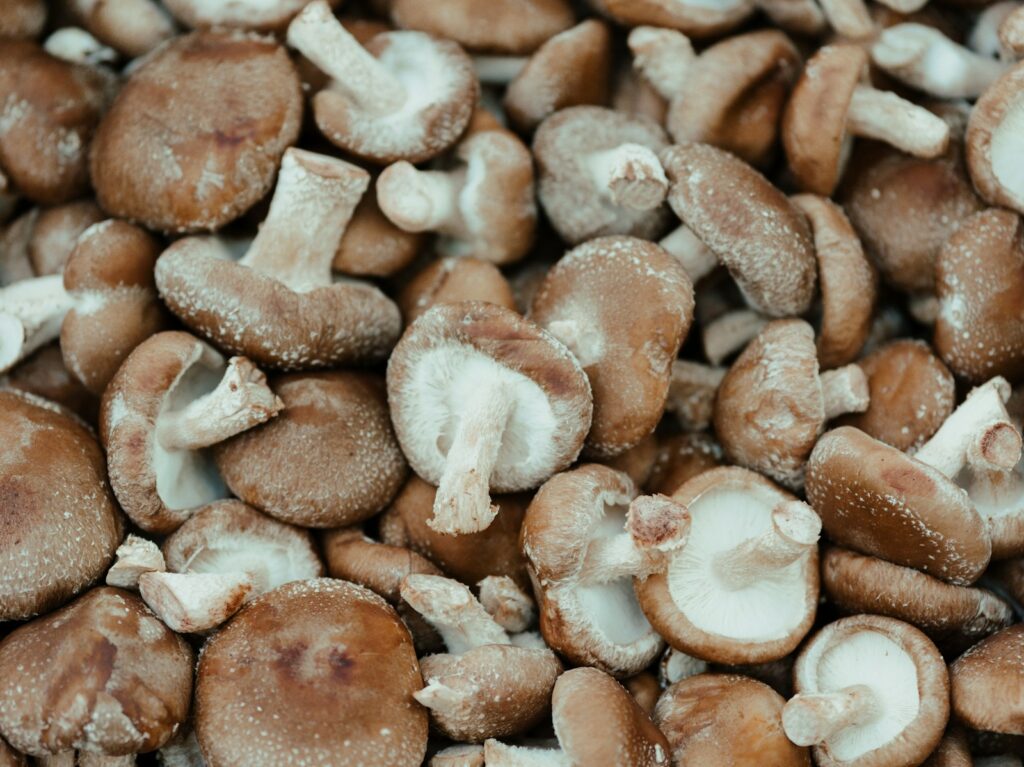
It is not a hallucinogen, not a poisonous mushroom, not a fashion product. Shiitake is a basidiomycete — a fungus — with a fruiting body that reaches between 5 and 25 centimeters in diameter, depending on the cultivation conditions. The surface is light to dark brown, often with a characteristic, slightly cracked pattern. The lamellae are white to cream-coloured, the flesh firm and whitish.
What distinguishes shiitake from other edible mushrooms: its unusually rich profile of secondary plant substances — above all the polysaccharide lentinan, the alkaloid eritadenine and various beta-glucans. These compounds are at the core of the scientific debate on this fungus.
What does shiitake taste like? Aroma, texture and culinary quality
If you cook shiitake for the first time, you smell it first. The aroma is difficult to describe: deep, woody, with a slight hint of smoked wood. Not intrusive, but unmistakably present. Behind the first impression, a taste opens up, which in Japanese is summed up in a single word: umami.
Fresh shiitake has a firm, fleshy texture with the slight bite typical of edible mushrooms. As it cooks, it softens, contracts a little and intensifies its aroma. Dried shiitake — often preferred in Asian cuisine — develops additional aroma complexity through the drying process through the formation of lenthionine, a sulfur-containing compound responsible for the characteristic fragrance.
Texture notes depending on the preparation:
- Short-fried: slightly crispy on the edges, juicy in the core
- Steamed: velvety, almost meat-like
- In broths: soft, with a deep umami base for the broth
- Dried and soaked: firm bite, concentrated aroma
History and Origin: Millennia of Cultivation
The earliest written evidence of shiitake cultivation dates back to the Chinese Song Dynasty (960–1279 AD). At that time, the researcher Wu Sang Kwuang documented cultivation techniques for the first time in which trunks of oak species were inoculated with fungal mycelium — a process that is still used today in its basic features.
In Japan, shiitake gained importance from the 13th century onwards, first in courtly cuisine and monasteries, later as a commodity. The Edo period (1603–1868) brought an intensification of commercial cultivation. Dried shiitake became an important export to China.
In Traditional Chinese Medicine (TCM), shiitake — often called xiāng gū (fragrant mushroom) — has been used for centuries. It was considered a strengthening, balancing agent that supports Qi, tones the immune system and contributes to longevity. These attributions have only triggered scientific research in recent decades, not replaced it.
Today, China is the largest producer in the world, followed by Japan and Korea. In Europe — including Austria — commercial cultivation has increased noticeably in the last two decades.
Nutritional profile of shiitake: What’s really in it?
Shiitake is not a superfood exaggeration. It is a real nutrient-rich mushroom with a profile that is rare in this combination.
Macronutrients (per 100 g fresh)
- Energy: approx. 34 kcal
- Protein: approx. 2.2 g (all essential amino acids represented)
- Carbohydrates: approx. 6.8 g
- Fiber: approx. 2.5 g
- Fat: approx. 0.5 g
Micronutrients
- B vitamins: B2 (riboflavin), B3 (niacin), B5 (pantothenic acid), B6, folic acid
- Vitamin D: When exposed to UV (sun drying), shiitake produces relevant amounts of vitamin D2
- Minerals: Copper, zinc, manganese, selenium, phosphorus
- Trace elements: Iron, Potassium
Bioactive compounds
- Lentinan: Beta-1,3/1,6-glucan, main research subject
- Eritadenine: Purine derivative, potentially cholesterol-modulating effect
- KS-2: Glycoprotein from the mycelium
- Lenthionine: Sulfur-containing flavor molecule
- Sterols: Ergosterol as a vitamin D precursor
The combination of B vitamins, selenium and zinc makes shiitake particularly interesting for people who eat a predominantly plant-based diet.
Possible effect of shiitake on health
Note: The following overview reflects the state of scientific research. Dietary supplements are not a substitute for medical treatment. In the event of health complaints, medical advice should be sought.
Immune system
The most intensively studied field. The polysaccharide lentinan has shown immunomodulating properties in numerous studies — it appears to activate certain immune cells (macrophages, natural killer cells). In Japan, lentinan is approved as a prescription drug and is used adjuvant in oncology. This approval applies to isolated, injected lentinan — not to the fungus as a whole.
Cholesterol and cardiovascular markers
In animal studies, eritadenine inhibits the enzyme that is partly responsible for cholesterol synthesis. Initial human studies indicate an LDL-reducing effect. The data situation is promising, but not yet sufficient for clinical recommendations.
Gut and microbiome
Shiitake contains soluble and insoluble fiber, as well as polysaccharides, which can act as prebiotics — food for gut bacteria. Preclinical studies show changes in microbiome composition after regular shiitake supplementation.
Antioxidant Capacity
Selenium, ergothioneine, and various phenolic compounds contribute to the antioxidant activity of the mushroom. Oxidative stress is considered a co-factor in numerous chronic diseases; the direct transferability to the human organism remains the subject of further research.
Antimicrobial properties
Laboratory studies show antimicrobial activity of certain shiitake extracts against selected bacterial and fungal strains. Practical applications in human medicine are currently not proven.
Traditional use in Asia
Shiitake was never just food in China. It was medicine — or rather, the boundary between the two did not exist. In TCM systematics, it was assigned to the gastro-spleen system, was considered to strengthen Qi and blood and was used to support after a long illness or in case of general exhaustion.
In Japanese cuisine, it formed the basis of dashi broths — along with kombu. These clear funds are not simply soups; they are the basic taste structure for an entire kitchen style. The Maillard reaction during the roasting of the dried mushrooms created depth without fat, complexity without effort.
Korean and Chinese home remedies used shiitake teas and broths for colds, weakness, and as a general tonic — uses that have been passed down in oral tradition for generations.
Scientific Research on Shiitake: Current Status
Shiitake is one of the most thoroughly studied edible mushrooms. Research focuses on a few core areas:
Lentinan and Immunology
Lentinan has been the subject of systematic research since the 1970s. It has been isolated from the fruiting body, chemically characterized and studied in clinical trials on cancer patients. In Japan and China, it is approved as an adjunctive therapeutic. The data situation for oral administration (versus intravenous administration) is less extensive, but growing.
Eritadenine and lipid metabolism
Several animal studies show significant effects on cholesterol levels. A human pilot study from Japan (2011) observed changes in lipid markers after four weeks of daily shiitake intake. Larger randomized trials are still missing.
Microbiome Modulation
A randomized human study (Dai et al., 2015, Journal of the American College of Nutrition) showed that daily shiitake consumption for four weeks positively influenced the composition of the gut microbiome and altered immune markers. This is one of the more solid studies with direct transferability to humans.
Beta-glucans in general
Beta-glucans from mushrooms — which includes shiitakes lentinan — are not linked to an officially approved health claim by EFSA (European Food Safety Authority). The research is active, but not yet complete.
Shiitake in everyday life: how and when to use it?
The most consistent recommendation of the research literature is continuity. Shiitake does not unfold its effect through a single consumption, but through regular intake over weeks and months. This logic applies to the food as well as to the extract.
As food
Fresh or dried shiitake mushrooms can be used in a variety of ways: in woks, in broths, in risotto, as a meat substitute in ragouts, thinly sliced and briefly fried as a topping. Complete cooking is crucial — raw shiitake contains lenthionine precursors, which can trigger skin reactions in some people (more on this in the section on side effects).
As an extract
Shiitake extracts — especially dual extracts that break down both water- and alcohol-soluble compounds — offer a concentrated and more bioavailable form of absorption. When buying, it is crucial: made exclusively from the fruiting body (Lentinula edodes), not from the grain-based mycelium.
The organic shiitake liquid extract from TAOVITALIS is made from organically grown shiitake fruiting body, processed as a dual extract and produced in Austria. The recommended daily dose is 40 drops.
Shiitake in the morning routine: tea, coffee and cocoa rituals
There is a silent shift in the way people start their mornings. Less caffeine maximization, more conscious preparation. Mushroom extracts have established themselves as a practical addition — not because they change everything, but because they fit into what already works.
In coffee
Shiitake extract has a rather neutral to slightly earthy profile. He doesn’t dominate, he changes. A few drops in a good black coffee make a base that is a little deeper — less shrill, a little rounder. For people who enjoy coffee but are sensitive to pure caffeine, this can be an interesting approach.
In tea
Particularly harmonious: in green tea (gyokuro or sencha) or in a mild pu-erh. The tannins of the tea complement the earthy aromas of the mushroom. In the evening, a soothing rooibos with a shiitake extract is suitable as part of a mindful sleep preparation — supplemented, if you like, with the organic reishi liquid extract for rest and relaxation.
In cocoa
Ceremonial chocolate and mushroom extracts — a combination that is increasingly becoming established in functional wellness cuisine. The bitter aromas of the cocoa and the depth of the shiitake extract complement each other. Add a little cinnamon, a hint of chili, some plant-based milk — an evening ritual that develops its own rhythm.
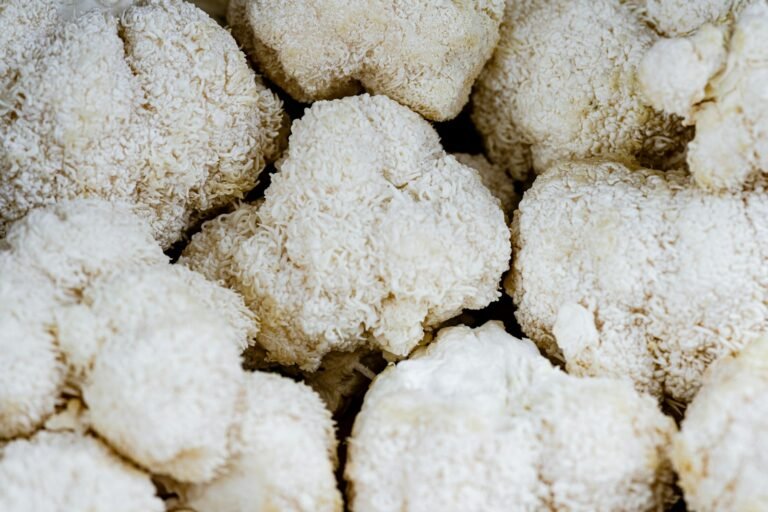
For a more concentrated moment of focus in the morning, Shiitake Extract can also be combined with Bio-Lion’s Mane Liquid Extract — a pairing that many users appreciate in daily practice.
Storage and preparation of shiitake
Fresh mushrooms
- Store in the refrigerator, in a paper bag, or loose (not plastic): lasts 5–7 days
- Do not wash, but clean with a damp cloth or brush
- Remove stems or use separately for broths — they are woodier and need longer cooking times
- Fully cooked (at least 3-5 minutes)
Dried mushrooms
- Cool, dark, dry: almost unlimited shelf life
- Soak in warm water for 20-30 minutes before use
- The soaking water is a concentrated stock — ideal for soups and sauces
Extracts
- Store at room temperature, protected from light
- Shake the bottle before use
- Take daily, preferably at the same time
Side effects and notes about shiitake
Shiitake is considered one of the safest foods and supplements. Nevertheless, there are some relevant points:
Shiitake dermatitis
The most well-known risk: When consuming raw or insufficiently cooked shiitake mushrooms, some people may experience a characteristic strip-like reddening of the skin — known as shiitake dermatitis or flagellant dermatitis. The trigger is lenthionine, which is broken down when heated sufficiently. Fully cooked or processed as an extract shiitake do not show this reaction.
Allergies
Fungal allergies are rare, but possible. If you have a known allergy to mold or other types of fungi, shiitake should first be tested in small quantities.
Interactions
Theoretically, beta-glucans can stimulate the immune system. In the case of autoimmune diseases or immunosuppression (e.g. after organ transplantation), medical advice should be sought before use.
Pregnancy and breastfeeding
Safe as a food in moderate quantities. Specific studies are lacking for extracts in higher concentrations; if you are unsure, medical consultation is recommended.
Frequently Asked Questions about Shiitake
Is shiitake healthy?
Yes — as part of a balanced diet, shiitake is considered an exceptionally nutrient-dense mushroom. It contains B vitamins, zinc, selenium, as well as polysaccharides such as lentinan, which are being studied in research for their immunomodulating properties. As a supplement to a healthy lifestyle — not as a substitute for medical treatment — it provides a solid foundation.
What does shiitake taste like?
Intense, hearty, with a deep umami character and a slight smoked wood undertone. When dried, the aroma is even more concentrated. Freshly fried, it develops nutty notes. For many people, it is the most convincing of all edible mushrooms in terms of taste.
How to use shiitake correctly?
Fresh mushrooms should always be cooked completely. Dried mushrooms are soaked and the soaking water is reused as broth. As an extract, shiitake can be taken daily in water, tea, coffee or cocoa — 40 drops per day as a guideline.
Can you take shiitake daily?
Yes. Daily intake has been established in Asia for centuries and is in line with the recommendations of current research. Continuity is considered more important than single doses. As with all supplements, it is recommended to follow the manufacturer’s dosage recommendation.
What are the side effects of shiitake?
With fully cooked shiitake or high-quality extracts, side effects are rare. Raw or undercooked mushroom material can trigger shiitake dermatitis in sensitive people. In case of fungal allergies or immunosuppression, seek medical advice.
What is the difference between shiitake powder and shiitake extract?
Powder is ground dry material — nutrient-dense, but limited in its bioavailability because fungal cell walls are made of chitin and can remain undigested. A dual extract dissolves the bioactive compounds through water and alcohol extraction and increases availability. Crucial: extracts from the fruiting body, not from the grain-based mycelium.
When is the best time for shiitake?
There is no clinically defined optimal time. Regularity is more important than timing. Many people incorporate the extract into their morning routine — in coffee or tea — because it makes taking it a habit.
Can shiitake be paired with coffee?
Yes. Shiitake extract dissolves easily in hot drinks and changes the taste only minimally. The combination is easy to implement in terms of taste and practicality.
Is there any scientific evidence?
The research situation is more solid than for most other edible mushrooms. Lentinan is approved as a drug ingredient in Japan and China. Several human studies prove immunomodulatory effects. Research on eritadenine and the microbiome is considered promising, but is still in clinical development.
How is shiitake traditionally used?
In TCM as a strengthening, balancing remedy. In Japanese cuisine as a dashi base. In Korean folk medicine as cold tea and strengthening broth. All these traditions reflect an intuitive insight that modern science is gradually refining today.
Conclusion: Why shiitake should not be missing in any everyday life
Shiitake is not a trend. It is not a promise. It is one of the oldest cultivated mushrooms known to man, with a scientific foundation that sets it apart from most other supplements.
Its value lies in continuity. Consumed regularly — as an ingredient in the kitchen, as a broth, as an extract in the morning drink — it quietly contributes to a balanced foundation. No dramatic promises. No noise. Just a fungus that has been doing what it has always done for a thousand years.
For all those who want to explore shiitake as a daily supplement: The organic shiitake liquid extract from TAOVITALIS — under the Balance category — is from Austrian organic cultivation, exclusively from the fruiting body, processed as a dual extract and laboratory tested. A quiet decision for a quiet practice.
Other mushrooms in the TAOVITALIS range — Reishi for calm, Lion’s Mane for focus, Chaga for the intestines — can be added depending on the time of day and needs. More about this in the TAOVITALIS Journal and in our frequently asked questions.