
There are things in nature that are not beautiful – and yet have something in them that is fascinating. Chaga is one of them. Dark, irregularly shaped, at first glance more a flaw of the birch than a gift. If you take a closer look, you will find a mushroom with one of the longest usage histories in Northern Europe and Asia – and with a profile of ingredients that still occupies science today.
This article explains what chaga is, where it comes from, what is traditionally and scientifically known about it – and how to integrate it into modern everyday life in a meaningful way. No promises. No exaggerations. Only that which has actually been handed down and researched.
What is Chaga?
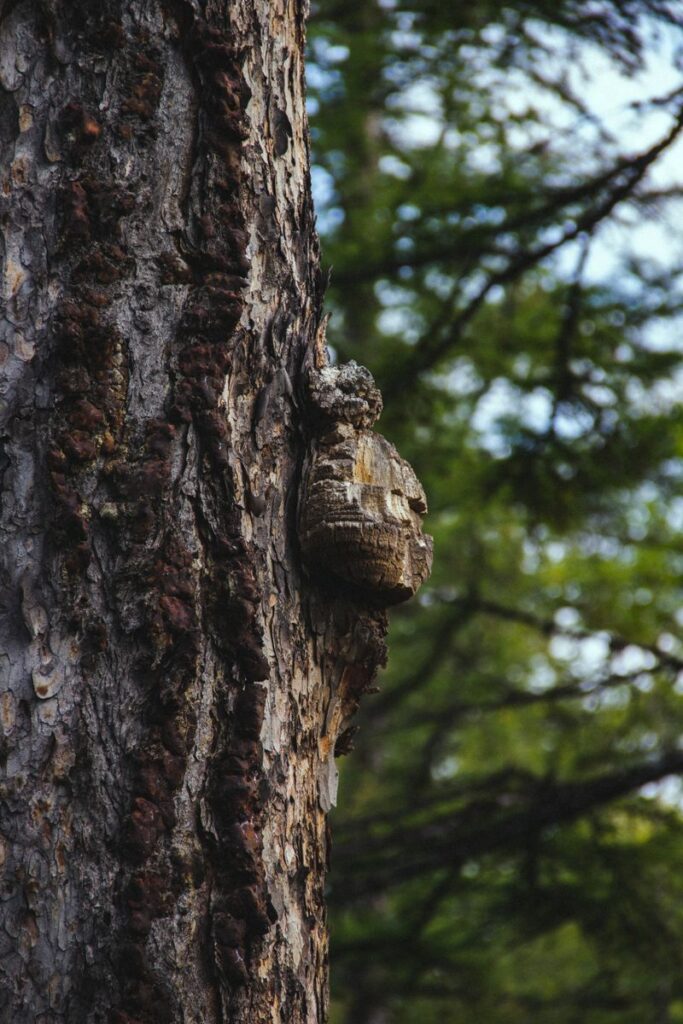
Chaga (Inonotus obliquus) is a parasitic fungus that attaches mainly to birch trees – less often to other deciduous trees. What looks like a burnt, sooty-black outgrowth from the outside is botanically a so-called sclerotium: a compacted fungal mass in which ingredients from the tree and the fungus itself accumulate over years.
Its scientific name, Inonotus obliquus, places it in the Hymenochaetaceae family. It does not belong to the genus of classic edible mushrooms. Chaga grows slowly – usually over many years – and forms a rust-brown to orange substance on the inside, which is visually very different from the black exterior.
In traditional use, the focus is not on enjoyment, but on extraction: Chaga is dried, processed into pieces or powder and then taken as an infusion, decoction or concentrated extract.
How is chaga different from other medicinal mushrooms?
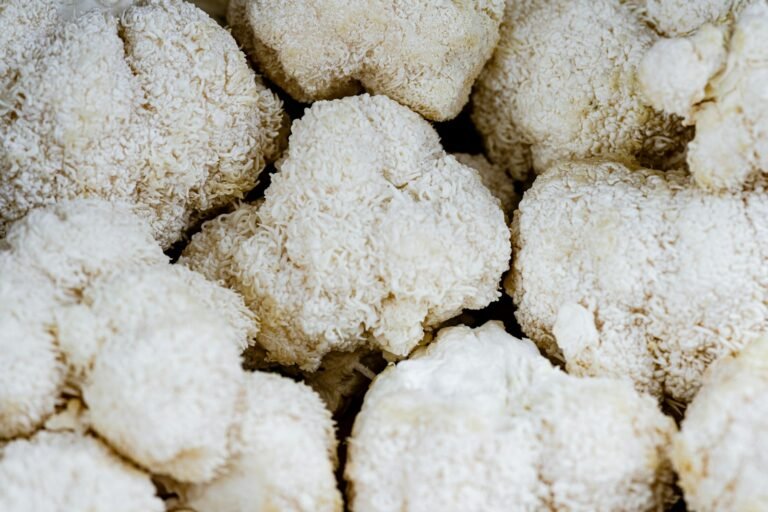
While mushrooms such as Reishi or Lion’s Mane are harvested as fruiting bodies, what is used in chaga is not a classic fruiting body in the mycological sense. This distinguishes it substantially – both in terms of processing and its ingredient profile. Chaga contains exceptionally high amounts of melanin, as well as betulin and betulinic acid, which it absorbs from birch bark. This exchange between mushroom and tree makes it biochemically unique among the well-known medicinal mushrooms.
Appearance, texture, and smell of chaga
From the outside, chaga is hard to confuse. The outgrowth has a deep black, cracked surface that is reminiscent of coal or burnt wood. This color is caused by the high melanin content – one of the highest natural melanin concentrations known in a biological organism. The cross-section shows a rust-brown to deep ochre reminiscent of cork.
The texture is hard and woody. Fresh chaga is almost impossible to break; dried chaga is brittle and can be cut into pieces or ground with a knife. A whole piece smells faintly earthy, slightly woody – restrained, almost neutral.
Infused as a tea, it develops an amber to deep brown liquid with a mild, slightly earthy aroma. Some describe the taste as gently bitter with hints of vanilla or caramel – pleasantly unobtrusive, making it one of the most accessible medicinal mushrooms for beginners.
Origin and history: A mushroom from the far north
Chaga grows mainly in colder climates of the northern hemisphere – in the boreal forests of Russia, Scandinavia, Canada and northern Asia. It prefers birch forests, where it thrives slowly over many years before being harvested.
The history of its use is deeply rooted. In Russia and Siberia, chaga has been known as “chaga” for centuries – as a tea against cold and exhaustion, as an everyday ritual, especially in rural regions where other resources were scarce. There are records from the 12th century that point to its use in Russian folk medicine. It was particularly common in areas of Siberia and northwestern Russia, where it was used as a coffee substitute during the war.
In Traditional Chinese Medicine (TCM), chaga is also found – there under the term “Bai Hua Rong” – especially in Far Eastern peripheral areas, where it was traditionally used as a strengthening agent for states of exhaustion. In North America, indigenous Ojibwe and Cree peoples used the mushroom externally and as a drink.
The breakthrough in the Western public came in part through the Russian Nobel Prize winner for literature Alexander Solzhenitsyn, who described chaga as a folk remedy in his novel “Cancer Station” (1966). This literary mention contributed to the scientific attention that began to develop in the Soviet Union from the 1950s onwards.
Chaga in modern wellness culture
Today, chaga has grown far beyond its geographical origins. It can be found in Scandinavian coffee houses, Japanese wellness studios and natural cosmetic formulations alike. This journey from the Siberian birch forest into urban morning rituals says something about how archaic knowledge is recontextualized in modern everyday life – not as a substitute for medicine, but as part of a more conscious lifestyle.
Nutrients and ingredients of chaga
Chaga is not a food in the classic sense – it is not eaten as a meal, but taken in small quantities as an extract or infusion. Nevertheless, its ingredient profile is remarkably complex.
The main bioactive compounds in chaga
- Polysaccharides and beta-glucans: Structurally active compounds that are intensively studied in fungal research.
- Melanin: One of the highest measured melanin levels in biological organisms. Melanin has antioxidant properties.
- Betulin and betulinic acid: Chaga absorbs these compounds directly from the birch bark – they are specific to this mushroom and are not present in this form in other medicinal mushrooms.
- Triterpenes: These include inotodiol and lanosterol derivatives, which are attracting attention in fungal research.
- Phenolic compounds and flavonoids: Highly antioxidant secondary metabolites.
- Minerals: Potassium, calcium, manganese, magnesium, iron, zinc as well as rubidium and cesium in small quantities.
- B vitamins (in traces): These include riboflavin and niacin.
What sets chaga apart from many other herbal supplements is the fact that many of its compounds are insoluble in water. A classic tea infusion thus extracts only part of its spectrum. Alcohol-water dual extracts – such as those used in high-quality liquid extracts – dissolve both water-soluble and fat-soluble compounds, providing a more complete profile.
Chaga effect – what does the research say?
It’s important to be clear here: Chaga is not a drug, and none of its traditional uses are recognized as a medical treatment. What we have is a growing number of laboratory and animal studies, as well as some early clinical observations – all of which are interesting, but not yet sufficient for clinical conclusions in humans.
Antioxidant Capacity
Chaga is one of the organisms with the highest measured antioxidant capacity of all – measurable, among other things, in the ORAC value (Oxygen Radical Absorbance Capacity). This property is mainly attributed to its high melanin and phenol content. Antioxidants neutralize free radicals in the body, which may be involved in cell damage. However, the direct relationship between dietary antioxidants and measurable health effects in humans is complex and not yet fully understood scientifically.
Immune system and beta-glucans
Beta-glucans are polysaccharide compounds that are the most intensively studied in fungal research. Various in vitro studies suggest that beta-glucans may have immunomodulating properties – meaning they can influence the activity of certain immune cells. Chaga contains significant amounts of these compounds. Whether and to what extent this effect occurs in humans through oral ingestion is the subject of ongoing research.
Adaptogenic properties
Chaga is described in some ethnobotanical traditions as an adaptogen – a term used to describe substances that are supposed to help the body adapt to stressors. Scientifically, the concept of adaptogen is controversial because it is difficult to operationalize. Some animal studies show interesting evidence of stress-modulating effects; Human studies are largely lacking.
Digestion and gut health
In traditional use, chaga has often been associated with digestive problems. Recent research is interested in the possible role of fungal polysaccharides as prebiotic compounds. Whether chaga extracts measurably influence the composition of the microbiome is currently being investigated.
Important note: None of the above potential properties constitute a medical statement. Chaga is classified as a dietary supplement and is not a cure.
How is chaga traditionally used?
The oldest and most widespread form of chaga use is tea – more precisely, a decoction: dried chaga pieces are boiled in hot water for a long time until a dark brown, aromatic liquid is formed. This preparation is more intense than a mere infusion and extracts a larger part of the water-soluble ingredients.
In Siberia and parts of northern Europe, chaga tea was consumed like an ordinary hot drink for generations – several times a day, without any special ceremony. The ingestion was more pragmatic than ritualistic. This is a remarkable difference to some other medicinal mushrooms, whose use was more strongly located in medical or ritual contexts.
In Russian and Eastern folk medicine, chaga was also used externally – as an infusion for the skin and scalp. This practice is less common today, but is increasingly finding its way into natural cosmetics.
In North America, the Ojibwe used chaga as incense to keep insects away – one of the few non-dietary uses that has been documented.
Scientific studies on chaga – an honest overview
The research on chaga is active, but still in its early stages. The majority of existing studies come from the field of basic research – i.e. in vitro experiments (cell culture) and animal models. Robust human clinical studies are lacking for most of the properties studied.
Some research focuses:
- Antioxidant activity: Several studies document a strong antioxidant activity of chaga extracts in the laboratory. This property is well documented, but its clinical relevance is not.
- Immunomodulation: Laboratory studies show that chaga polysaccharides can affect the activity of macrophages and natural killer cells. These observations come mainly from mouse models.
- Antitumor activity in the laboratory: Various cell studies have investigated cytotoxic effects of certain chaga compounds on tumor cell lines. These findings are interesting in the laboratory context, but in no way transferable to the situation in humans and should not be understood as proof of effectiveness.
- Blood sugar regulation: Some animal studies investigated the influence of chaga on blood glucose levels. Statements about the effect on humans cannot be derived from this.
- Inflammatory markers: Cell studies have shown evidence of an inhibitory effect of chaga extracts on certain inflammatory markers. Clinical significance: unclear.
Important for the consumer: Many claims about chaga circulating online refer to these early laboratory studies and are inappropriately generalized. A serious approach to the topic requires a distinction to be made between laboratory findings and clinically proven effectiveness.
Chaga in everyday life – rituals and forms of application
If you want to use chaga regularly, there are a number of formats to choose from today. Each has its own logic and fits different rhythms of life.
Chaga as a powder
Dried and ground chaga powder is the uncomplicated option. It is easy to stir into tea or warm drinks. The disadvantage: Pure powder usually contains only the water-soluble ingredients – fat-soluble compounds such as triterpenes are hardly dissolved without alcohol extraction.
Chaga as Extract – Powder vs. Liquid
Extracts concentrate the ingredients and make them more bioavailable. Powder extracts have the advantage of a long shelf life and easy dosing. Liquid extracts – so-called tincture formats – offer direct, rapid absorption through the oral mucosa and have the advantage of already being digested. For a dual extract (water + ethanol), both water-soluble and alcohol-soluble compounds are considered – which is closest to the overall spectrum of the mushroom.
When is the best time to do chaga?
Unlike cordyceps, which is more associated with activating properties, chaga is a morning or evening drink in terms of taste and tradition. Many people integrate it into their morning routine – as a supplement to coffee or as a stand-alone preparation before breakfast. In the evening, it fits into a deceleration routine as a calm, decaffeinated drink. A fixed intake time makes sense especially if you want to observe the effect over a longer period of time.
Chaga as tea, in coffee and cocoa
Chaga is one of the most adaptable mushroom products in terms of taste – its neutral, slightly earthy profile can be combined with many drinks without dominating them.
Chaga Tea
The classic preparation: Dried pieces of chaga or a teaspoon of chaga powder are steeped in hot – not boiling – water (approx. 70–80 °C) for 10 to 15 minutes. The result is a deep brown infusion with a mild, slightly smoky aroma. If you use a liquid extract, simply add a few drops to hot water – done.
Chaga in coffee
The combination of chaga with coffee is a growing trend – and tastefully coherent. The bitterness of the coffee harmonizes with the earthy tone of the chaga; the coffee takes on the leading role, while the mushroom extract remains in the background. A few drops of liquid extract can be stirred into any coffee without noticeably changing the taste.
Chaga in cocoa
Perhaps the most elegant combination: chaga in a warm, unsweetened raw cocoa. The chocolate notes and earthy character of the mushroom combine to create something that is full-bodied and calm at the same time. As an evening ritual – cocoa with a liquid extract of chaga and a pinch of cinnamon – this combination has something quiet about it that goes well with conscious enjoyment.
Chaga in other drinks
Smoothies, oat milk latte, golden milk – chaga fits into many preparations. The basic rule: Heat above 70 °C is harmless. Very high temperatures (over 100 °C) can affect certain heat-sensitive compounds, which is why it makes sense to cool the water slightly before infusion.
Storage and preparation of chaga
Storing Chaga Pieces and Powder
Dried chaga is robust. Chaga pieces can be stored in a dark, dry container at room temperature for months to years. Powder should be well sealed and stored away from light – moisture is the biggest enemy, as it can promote mold growth.
Storing liquid extracts
Ethanol-based liquid extracts have a natural shelf life due to their alcohol content. Store at room temperature, protected from light and well sealed – a simple rule that applies to most medicinal mushroom extracts. After opening, care must be taken to ensure clean handling to avoid contamination.
How to make your own chaga tea – step by step
- Prepare dried chaga pieces (approx. 5-10 g) or 1 tsp chaga powder.
- Heat water to approx. 70–80 °C – do not use boiling water.
- Add chaga to hot water and steep for 10-20 minutes; Pieces can also be infused several times.
- Strain and refine with a little honey or cinnamon to taste.
- Enjoy warm – or let cool to room temperature and drink as a cold brew throughout the day.
Chaga Side Effects and Notes
Chaga is considered well tolerated by most healthy adults when taken in moderation. Nevertheless, there are some points that should be considered when using it.
Oxalate content
Chaga contains comparatively high amounts of oxalates. People who are prone to kidney stones or suffer from hyperoxaluria should avoid chaga in high doses or seek medical advice beforehand. This is one of the few concretely proven risk potentials with regular consumption.
Drug interactions
There is evidence that chaga extracts can potentially affect the effects of blood-thinning medications (e.g., warfarin). People taking anticoagulants, antidiabetic drugs, or other prescription medications should consult with their doctor before taking chaga products.
Autoimmune diseases
Because chaga is believed to have immunomodulating properties, caution is advised in individuals with autoimmune diseases or immunosuppression. Here, too, the following applies: medical clarification before taking it.
Pregnancy and breastfeeding
There is insufficient safety data for pregnant and breastfeeding women. Regular intake is not recommended during these phases.
Quality of the source
Chaga collected from polluted forests or heavily polluted wood can accumulate heavy metals or other pollutants. The quality of the raw material and careful processing are therefore crucial. At TAOVITALIS , the mushrooms come from controlled organic cultivation and are laboratory tested.
Frequently asked questions about chaga
Is Chaga Healthy?
Chaga contains a number of bioactive compounds — including beta-glucans, polyphenols, and melanin — that show antioxidant and immunomodulatory properties in laboratory studies. Whether and to what extent these properties are clinically relevant in humans has not yet been sufficiently scientifically proven. As a dietary supplement in moderate amounts, chaga is considered well tolerated by healthy adults.
What does chaga taste like?
Chaga tastes mild, slightly earthy and subtly bitter as a tea – with a hint of vanilla or caramel that some perceive. It is much less intense than, for example, reishi and is considered one of the most accessible medicinal mushrooms in terms of taste.
How to use chaga?
Chaga can be taken as a tea infusion made from dried pieces, as a powder in beverages, or as a concentrated extract. Liquid extracts offer the advantage of easy dosing and direct absorption. The recommended procedure depends on the product in question – the manufacturer’s instructions should be followed.
Can you take chaga daily?
In traditional use, chaga tea was drunk daily. For extracts, regular, moderate intake is recommended according to the product instructions. Due to the oxalate content, caution is advised in the case of very high amounts or in the case of corresponding pre-existing conditions (kidney stones).
What are the side effects of chaga?
The best-known risks of high consumption are increased oxalate intake (relevant for those prone to kidney stones) and potential interactions with anticoagulants. People with autoimmune diseases, pregnant and breastfeeding women should seek medical advice before taking it.
Is there any scientific evidence for the effects of chaga?
There is a growing number of in vitro studies and animal models that show interesting properties – especially in terms of antioxidant activity and immunomodulation. Clinical human studies have so far been rare. The research is active, but not yet complete.
Can chaga be paired with coffee?
Yes. Chaga can be easily integrated into coffee – added to the finished coffee as a liquid extract or stirred in as a powder. The taste is complementary; the slightly earthy chaga tone blends well with the bitter profile of coffee.
What is the difference between chaga powder and chaga extract?
Raw chaga powder contains all the components of the dried mushroom – but not all of them are bioavailable. Extracts concentrate specific compounds and make them more accessible. Dual extracts (water + ethanol) capture both water-soluble and alcohol-soluble compounds and are considered more comprehensive.
When is the best time to take chaga?
There is no scientifically proven “optimal” time of intake. Traditionally, chaga tea was drunk in the morning. Many now incorporate it into their morning routine or evening as a calming, caffeine-free ritual. Consistency over time is more important than the exact time.
Where does chaga traditionally come from?
Chaga grows naturally in boreal forests of Russia, Scandinavia, Canada and North Asia – preferably on birch trees. The oldest documented use comes from Russia and Siberia, where chaga tea has served as an everyday drink for centuries. Traditional Chinese medicine and North American indigenous people also have a tradition of use.
Conclusion: Chaga – ancient mushroom, modern context
Chaga is not a trend. It is one of the few medicinal mushrooms whose use is so deeply rooted in different cultures that it is considered evidence in its own right – even if modern science is still in the process of understanding the biochemical mechanisms behind it.
What remains is a mushroom with an exceptional ingredient profile, a long history of daily use and a growing research base – while at the same time there is a clear need to distinguish between laboratory findings and clinically proven effectiveness.
If you want to integrate chaga into everyday life, the most elegant way to do so is to be consistent: as part of a morning routine, as a tea drink in the evening, or in a format that fits your own lifestyle. The quality of the product – origin, processing, extraction method – is a key factor in determining what actually reaches the body.
If you would like to learn more about the other medicinal mushrooms in the TAOVITALIS range, you will find more articles in the journal – as well as answers to the most frequently asked questions about liquid extracts, intake and quality in our FAQ .
This article is for informational purposes only and does not constitute medical advice. Food supplements are not a substitute for a balanced diet or medical treatment. If you have any health questions or are taking medication, it is recommended to seek medical advice beforehand.