Some mushrooms appear overnight. Agarikon takes its time. It clings to the trunks of old larches, chalk-pale and hard as wood, adding a new layer year after year. Some fruiting bodies outlive the people who walk past them. For a long time, surprisingly little was known about this quiet inhabitant of old forests – at least at the level where life can be read most precisely today.
That has now changed. In October 2026, a research team led by mycologist Paul Stamets and the US company Fungi Perfecti presented the first complete genome of agarikon (Laricifomes officinalis), published in the peer-reviewed journal G3: Genes, Genomes, Genetics. For fungal research, it is a milestone. For us, it is a good reason to take a closer look at one of Europe’s most unusual fungi.
Agarikon: a fungus with a very long breath
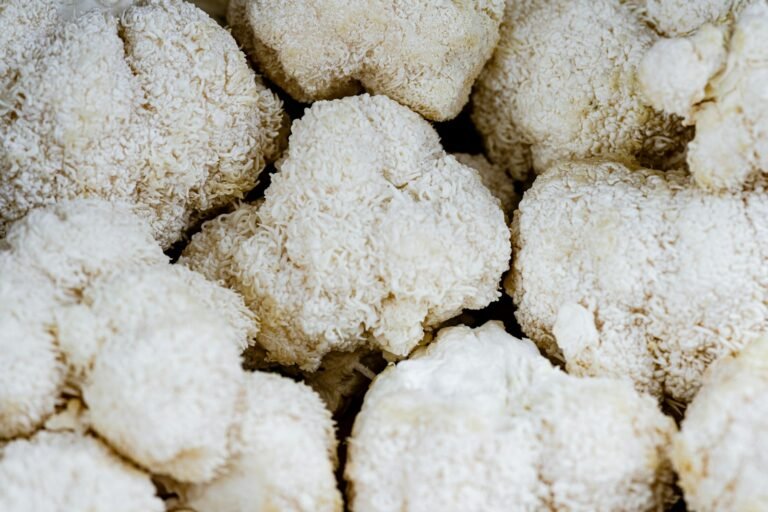
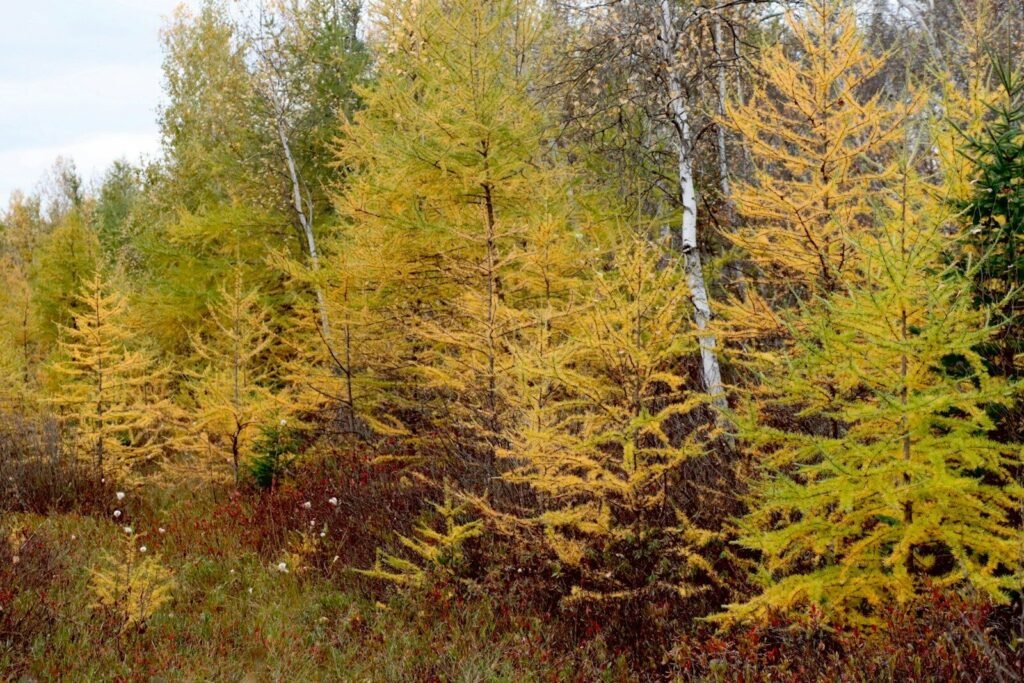
In German-speaking countries, agarikon is also known as Lärchenschwamm – the larch sponge – and the name says a lot. In the Alps it grows almost exclusively on old, living European larches; in North America it also grows on other conifers. Its fruiting bodies resemble hooves or small beehives, often elongated, cracked on the outside, chalky white inside. In the wood it causes a very slow brown rot that can accompany a tree for decades.
Botanically, the fungus is a loner. For a long time it was classified as Fomitopsis officinalis. Molecular studies, however, showed that it forms its own lineage among the polypores. Today it usually stands alone in the genus Laricifomes – which is why both names are still used side by side.
Two thousand years of cultural history
Few fungi were documented in writing so early. As far back as the first century, “agaricon” appears in the works of ancient naturalists. Over the centuries the fungus travelled through herbals and apothecary shelves. Its strikingly bitter taste earned it the English nickname “quinine conk”.
On the Pacific coast of North America, it played a special role as well. Indigenous communities carved figures from its fruiting bodies that stood as guardians at the graves of healers; the name “bread of the ghosts” has also been handed down. These are traces of a relationship between people and fungi that reaches far beyond the practical.
This history has a downside. In the 19th and 20th centuries, the larch sponge was collected and traded on a large scale. As a result, it nearly disappeared from many parts of the Alps.
What the new agarikon genome reveals
A genome is the complete genetic information of an organism – less a recipe than a carefully kept archive. Until now, agarikon lacked such a reference. The team has sequenced and annotated both the nuclear genome and the mitochondrial genome, locating and describing the individual genes. The key figures at a glance:
- Size: around 28.76 megabases in the nucleus
- Completeness: estimated at 99.4 percent
- Genes: 8,717 predicted genes, 8,604 of them protein-coding
- Biosynthetic gene clusters: 287 genes across 27 candidate clusters
The last point matters most for research. Biosynthetic gene clusters are groups of genes that work together to build certain metabolic products – so-called secondary metabolites, which fungi use, for example, to respond to their environment. How agarikon assembles its characteristic compounds was largely unknown. The genome now provides the coordinates where further studies can begin.
Why a genome helps conservation
The International Union for Conservation of Nature lists agarikon as “Endangered” on its Red List. The reasons: historical overharvesting, the loss of old-growth forests, and the enormous time a fruiting body needs to grow. Several European countries also include the fungus on national red lists or protect it by law.
A reference genome is a surprisingly practical tool here. It allows the fungus to be identified more reliably, for example when material turns up in trade. It shows how genetically different populations in Europe and North America are, and makes it possible to track changes over the years. According to Fungi Perfecti, the company maintains the world’s largest culture collection of the fungus, with cultures from more than 120 individual specimens – a living archive of genetic diversity that the new genome finally makes readable.
That protection can work is shown by an example from the Italian Alps. In a nature park in Piedmont, the larch sponge can again be found regularly. The researchers attribute this to two factors: preserved habitats with old larches and a strict ban on collecting.
Mycelium instead of wild harvesting: a question of attitude
Because agarikon fruiting bodies are so rare and grow so slowly, research increasingly works with cultivated mycelium – the fine, branching fungal network that thrives under controlled conditions in the lab. The material for the genome analysis also came from mycelial cultures. The forest stays untouched.
This question does not only apply to rare species. With chaga, which grows on birch, it is worth asking where the material comes from and how it was harvested. Reishi today comes mostly from cultivation, and with Cordyceps militaris, a cultivable species of cordyceps has become established. Origin, cultivation and processing are not side issues – they are the core of quality.
What the research does (not yet) tell us
As significant as this work is, it is above all a foundation. A genome describes which possibilities are laid out in an organism – not which of them actually happen, and under what conditions. Which genes are active, which compounds the fungus forms in the wild, and how individual populations differ are questions for the coming years.
For context, it also matters that the study was carried out in the research lab of a company that sells mushroom products itself. That does not diminish the work – it was peer-reviewed, and a preprint is freely available. Still, it is important for an honest reading. Good science depends on other groups picking up results, testing them and building on them.
Frequently asked questions about agarikon
Does agarikon grow in the Alps?
Yes. The larch sponge is tied to old larches and occurs in the Alpine region, but is considered very rare there. If you come across one, it is best to leave it where it is – the fungus is protected in many places and grows over decades.
Are agarikon and Fomitopsis officinalis the same fungus?
Yes. Fomitopsis officinalis is the older, still widely used name. Because genetic analyses show an independent lineage, Laricifomes officinalis is the name most commonly used today.
What is a “biosynthetic gene cluster”?
A group of neighbouring genes that together provide the building blocks for certain metabolic products. In agarikon, 27 such candidates were found – a starting point for future basic research.
A slow fungus, a patient science
Perhaps it fits that agarikon, of all fungi, had to wait so long for its genetic map. A fungus that grows over decades calls for research that does not rush either. The new genome answers few questions definitively – but it makes many of them possible to ask.
And it is a reminder of something beyond the lab: some things only last if you give them time. Old larches. Old forests. And a quiet fungus that has been part of our cultural history for two thousand years.
Sources
- Fungi Perfecti / PR Newswire (13 Oct 2026): Press release on the genome study
- Genomic characterization of the endangered medicinal polypore agarikon (Laricifomes officinalis syn. Fomitopsis officinalis), G3: Genes, Genomes, Genetics (2026). Preprint on bioRxiv
- IUCN Red List: Fomitopsis officinalis
- Acta Mycologica: Laricifomes officinalis in the Alpe Veglia–Alpe Devero Natural Park